Outdoor Living Space Ideas: 25 Beautiful Ways to Turn Your Backyard Into a Relaxing Retreat
Imagine stepping outside and finding a peaceful haven. A place to unwind, spend time with family, or enjoy the air. Your backyard is full of potential. Many feel stuck with their outdoor spaces. But, your yard can be more than just a space. It can be a joy-filled extension of your home, adding value.
Creating a backyard that works for your family is simple. You don’t need a big budget or a designer. What you need is a plan and ideas that fit your life.
Recent surveys show more homeowners are making their outdoor spaces functional. These areas boost home values and bring families closer together.
This guide offers 25 unique ideas for your backyard. You’ll learn to mix beauty with function. You’ll discover how to use your space well. And, you’ll get steps to start your backyard makeover today.

Key Takeaways
- Transform your backyard into a functional retreat with thoughtful planning and clear goals
- Outdoor living space ideas increase property value and improve quality of life for your family
- Balance aesthetics and utility to create spaces that work for how you actually live
- Use your available square footage wisely with strategic design choices
- Small changes can make big differences in how you enjoy your outdoor areas
- Professional design inspiration does not require a big budget to implement
- Start with one area and expand your backyard improvements over time
Assessing Your Backyard Potential
Before you start building your dream outdoor space, you need to evaluate what you’re working with. Taking time to assess your backyard living space sets the foundation for a successful project. This process involves looking at several key factors that will shape your entire outdoor living design plan.
Start by examining your yard’s natural features. Walk around and observe how sunlight moves across your property throughout the day. Some areas receive full sun, while others stay shaded most of the time. Understanding these patterns helps you decide where to place seating areas, dining zones, and garden features.
Next, look at the ground itself. Check if your yard slopes or sits level. You should also watch how water drains after rainfall. Poor drainage can cause problems later, so identifying wet spots now saves headaches down the road.
Consider these important assessment points:
- Sun exposure and shade patterns throughout the day
- Existing trees, plants, and natural features
- Soil condition and drainage flow
- Views you want to highlight or hide
- Access points and natural traffic patterns
- Local zoning laws and property lines
Check your local zoning regulations before planning. Some areas have restrictions on structures, height limits, or setback requirements. Knowing these rules prevents costly mistakes later.
| Assessment Factor | What to Look For | Why It Matters |
|---|---|---|
| Sunlight Patterns | Full sun (6+ hours), partial shade, full shade | Determines furniture placement and plant selection |
| Ground Slope | Level areas or significant inclines | Affects construction costs and water drainage |
| Water Drainage | Standing water, soggy areas, runoff direction | Prevents flooding and structural damage |
| Existing Features | Trees, rocks, built structures | Provides natural elements to build around |
| Space Dimensions | Measure length and width of usable area | Helps scale furniture and layout appropriately |
Taking measurements is crucial. Use a tape measure to document your yard’s dimensions. Write down distances from property lines to existing structures. These measurements guide your layout decisions and help professionals provide accurate estimates if you hire help.
Finally, think about how your family uses the space. Do you need room for active games, quiet relaxation, or entertaining guests? Your lifestyle shapes everything about your outdoor design from this point forward.
Creative Outdoor Living Space Ideas
Your backyard is full of possibilities. With careful planning and smart choices, you can make it a peaceful and welcoming space. The right design blends nature with features that fit your lifestyle. Whether your yard is big or small, there are creative ways to make it beautiful.
Incorporating Natural Elements
Natural elements add life and calm to your backyard. They connect your space to nature and create a relaxing atmosphere.
- Native plants that thrive in your climate region
- Stone pathways and rock gardens for visual interest
- Water features like fountains or small ponds
- Natural wood structures and deck materials
- Gravel or mulch beds for texture and depth
Native plants need less water and care than exotic ones. Stone pathways add elegance and guide visitors. Water features create calming sounds that block out street noise. These elements enhance your outdoor space and encourage relaxation.

Maximizing Small Garden Areas
Even small spaces can be beautiful. Smart design tricks can turn compact areas into stunning retreats.
| Space-Saving Technique | Benefits | Best For |
|---|---|---|
| Vertical Gardening | Uses wall and fence space efficiently | Herbs, climbing vines, small plants |
| Hanging Planters | Adds greenery without floor space | Flowers, trailing plants, vegetables |
| Multi-Functional Furniture | Serves dual purposes, tucks away neatly | Storage benches, fold-up tables |
| Layered Textures | Creates depth and visual interest | Mixed plants, wood, stone combinations |
Color and texture make your garden feel bigger. Mix light and dark tones for depth. Use climbing vines to draw the eye up. Fold-away furniture keeps your space open when not in use. These tips can make even the smallest backyard look like a pro landscape.
Designing a Functional Outdoor Entertainment Area
A well-planned outdoor entertainment area is the heart of your home in warm months. It should smoothly connect with your indoor spaces. This makes it perfect for family dinners and big gatherings.
Think about how guests will move around. Make sure the kitchen and dining areas are close. This makes hosting easier and more fun.
Good outdoor living design is both comfortable and practical. It balances open space with cozy seating areas. Whether you’re hosting two or twenty, guests should feel at home.
Choosing the Right Layout
Your outdoor area’s layout depends on your space and how you’ll use it. Start by measuring your area. Mark off zones for different activities. Think about traffic flow and sight lines from your home.
- Identify the natural focal point in your yard
- Position seating to face this focal point
- Leave pathways clear and easy to navigate
- Group furniture to create conversation areas
- Keep the layout flexible for different events
Integrating Kitchen and Dining Zones
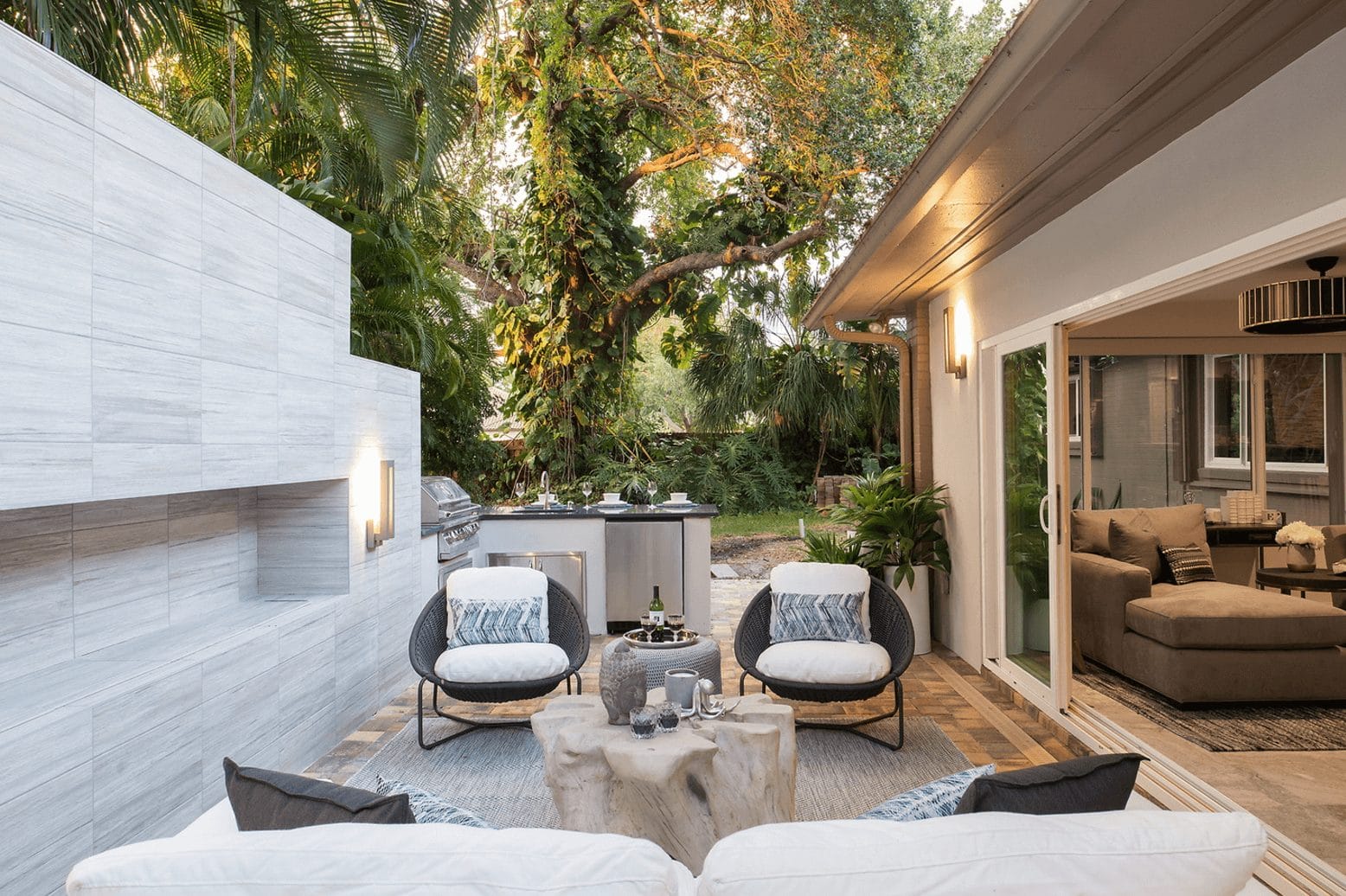
Connecting your kitchen to your outdoor dining space is key for outdoor living design. Proximity is important when cooking for guests. A built-in grill or pizza oven makes your area better.
These cooking stations let you cook while chatting with guests. This makes your outdoor area more enjoyable.
| Cooking Feature | Benefits | Space Needed |
|---|---|---|
| Built-in Grill | Quick meal prep, professional results, easy cleanup | 4 x 6 feet minimum |
| Pizza Oven | Unique dining experience, gathers crowds, memorable meals | 5 x 7 feet minimum |
| Outdoor Refrigerator | Keeps drinks cold, reduces trips inside, convenience | 2 x 3 feet |
| Prep Counter | Extra workspace, organized cooking, guest interaction | 3 x 4 feet minimum |
Place your cooking area where you can see the dining zone. Keep it close so you can cook without missing out on conversation. Your outdoor area works best when the cook stays connected to guests.
Natural spacing between zones keeps smoke and heat away from your dining area.
Selecting Durable Furniture for Patio Living Ideas
Your outdoor furniture choice is key to your patio’s success. Quality pieces protect your investment and create a cozy retreat. The right materials and styles keep your space beautiful and functional for years.
Durability and comfort are essential for lasting patio living ideas. High-quality outdoor furniture withstands weather damage and wear. It combines strength with style.

Weather Resistant Material Choices
Materials are crucial for your patio. UV-resistant fabrics keep colors bright and prevent fading. Your frame choices protect against rust and decay.
Here are top material options:
- Powder-coated aluminum frames resist rust and corrosion
- Teak wood offers natural durability and weather resistance
- Sunbrella fabric provides UV protection and stain resistance
- Synthetic wicker withstands moisture and temperature changes
- Stainless steel hardware prevents rust and extends furniture life
| Material Type | Durability Rating | Maintenance Level | Best For |
|---|---|---|---|
| Powder-Coated Aluminum | Excellent | Low | Modern designs and high-traffic areas |
| Teak Wood | Excellent | Medium | Classic styles and all climates |
| Synthetic Wicker | Very Good | Low | Casual seating and covered patios |
| Sunbrella Fabric | Excellent | Low | Cushions and upholstery |
Comfort and Style Considerations
Durability is important, but comfort is key. Your outdoor furniture should invite relaxation. Plush cushions and ergonomic designs create a true retreat.
Balance comfort and style:
- Choose cushions with high-density foam for lasting support
- Select colors that match your home’s exterior palette
- Pick styles reflecting your personal taste and home design
- Ensure seat heights accommodate all users comfortably
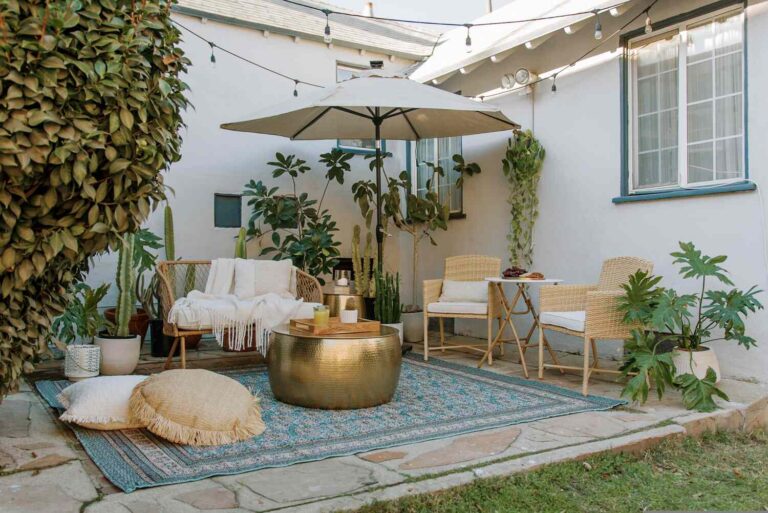
- Layer textures with throw pillows and outdoor rugs
Your furniture choices define your outdoor space’s personality. Investing in quality means enjoying beautiful, comfortable patio living ideas season after season. Well-chosen furniture turns your backyard into a welcoming spot for relaxation and entertaining.
Enhancing Your Backyard Living Space with Lighting
Lighting turns your backyard into a magical place that’s perfect for night. The right lights make it warm and inviting, so people want to stay outside even when it’s dark. By placing lights carefully, you can show off your yard’s best parts while keeping it safe.
Using different lights adds depth and interest to your outdoor space. Start with ambient lights to set the mood. Then, add task lights near where people sit and cook. Accent lights highlight special features like trees and water.
Here are key lighting types for your yard:
- String lights draped overhead create a cozy, festive atmosphere
- Path markers illuminate walkways and prevent tripping hazards
- Motion-sensor spotlights enhance security and surprise guests with unexpected illumination
- Deck and patio lights highlight architectural details and seating areas
- Solar-powered options reduce energy costs without sacrificing brightness
LED lights are a game-changer for outdoor lighting. They use less energy and last longer than old bulbs. This smart choice saves money and keeps your yard looking great.
Good lighting also makes your yard safer for guests. It lights up dark spots and shows where to walk. This makes your yard a welcoming place for everyone.
Conclusion
Your backyard can become a personal oasis with the right planning. This guide has given you a roadmap to create an outdoor area that suits your lifestyle. By choosing quality materials, you’ll create a retreat that lasts.
Creating your ideal outdoor environment starts with knowing what you want. Do you need a space for family gatherings or a quiet spot to read? The best designs mix your needs with the beauty of nature. Quality furniture, good lighting, and practical layouts make your space welcoming and useful.
Don’t feel overwhelmed if you can’t do everything at once. Start with one or two changes that excite you. Whether it’s adding a fire pit, deck lighting, or a dining area, each step brings you closer to your dream backyard. Your outdoor space can also increase your home’s value and create lasting memories for your family.